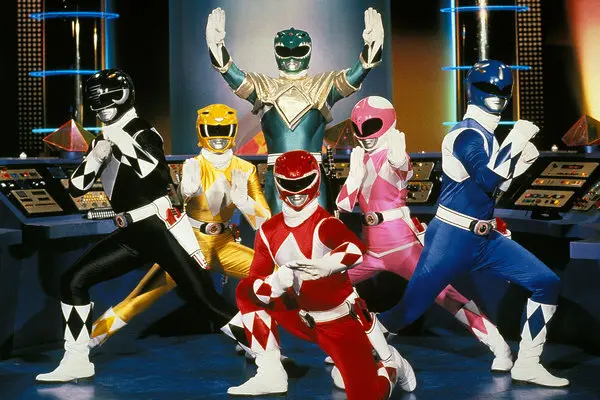
At a pub quiz in spring 2019, I stood confidently as I answered “28th August 1993” to a solo question our team had been asked. The question was, “when did ‘Mighty Morphin Power Rangers’ first air?”.
Our team got the points and I got some bewildered stares. How the hell did I know that?
I am pretty good at remembering dates, and known amongst friends for this skill, but why this one? A show that we’d all grown up through the explosion of, yet ‘our era’ of its run had ended more than two decades ago at that point in time.
Power Rangers feels as it if it’s ingrained in me. I was an impressionable 6 year old by the time of its UK terrestrial TV debut on 21st April 1994, as part of ITV’s GMTV programming block. Our house was limited to the four terrestrial channels, so I’d missed its Sky One broadcast that started in October ’93. My Uncle, who is just 4 years older than me, hadn’t.
He was staying with us around the time it was more widely available in the UK and wanted to watch an episode. The TV was firmly my domain and him being given control of the remote for 20 minutes set me off on a bad start with the show. My favourites at the time were still the Teenage Mutant Hero Turtles and Sonic The Hedgehog animated series.
To my memory, my refusal to buy into the hype lasted a long time. Looking at the dates now, this was probably no more than a few months, which to be fair, is a long time when this equated to approximately 4% of my life.
By 1995 I had little interest in much else. We were struggling financially as a family, my Mum had survived some life threatening health issues and my Dad was forced to take work abroad. The pocket money I had and budgets for Christmas and birthday presents were likely all funnelled into Power Rangers toys and merchandise.
The franchise is a comfort zone for me in my nostalgic state of mind today, it likely served an even greater purpose for me along these same lines in the mid ’90s. The premise is a pretty cut and dry story of good and evil. It’s touch and go at times but the heroes ultimately win, every time.
My life experience at this age wasn’t too dissimilar to this, perilously close to absolute tragedy, yet somehow worked out alright in the end. Although I didn’t learn until I was older exactly how bad things were, it was clear things weren’t right, by my limited comparison to other families if nothing else.
Living on a balancing point may not have resulted in depression, it certainly resulted in anxiety.
In November ’95, with my Dad working away and our home too cold to live in because we didn’t have central heating at the time, My Mum, my younger brother and I went to stay with my Nan and Grandad. This was the month the first Power Rangers movie was released on VHS. We had a copy and a life sized poster of the White Ranger. Unfortunately my Grandparent’s didn’t have a VCR at the time, so we couldn’t watch it, but I put the poster up on the wall in the bedroom the three of us stayed in and I can still picture it there clear as day now.
I probably needed that feeling of a hero watching over me. I definitely didn’t need the shock of waking up and it having fallen on top of me. Blu tack is fucking useless.
Maybe it was being late to the party, having limited access, or perhaps just how important the show became to me that I seemed to stick with it a little longer than most of my friends did, still following Power Rangers through the subsequent series Power Rangers Zeo, Turbo and In Space. When Power Rangers Lost Galaxy distanced itself from the original characters and continuity I accepted I’d probably outstayed my welcome and moved on almost entirely.
Twenty years after it’s explosion on to our screens (at the various staggered points previously outlined), a platform totally unimaginable in 1993 called ‘Netflix’ gained the rights to the show and made 20 seasons freely available for the price of a £5.99 monthly subscription (what a bargain, it’s now £15.99).
Oh, I had conflicting feelings about this that stemmed from a deep rooted frustration. There was one point when I was trying to watch the show as a kid and GMTV were airing episodes across the week in measly 7 minute segments. If I missed Wednesday’s 7:40am portion for one of a multitude of potential ‘getting ready for school’ reasons, I was stuffed. Add to this that our main TV was broke and I had to resort to a portable black and white TV. Not the best way to watch a series about 6 similar looking superheroes, set apart by their brightly coloured outfits.
I despised the sight of Eamon Holmes introducing these editions, almost as much as I despise every word that comes out of his mouth as a washed up anti-woke ‘broadcaster’ in 2023. Give me Lord Zedd any day, at least his jokes were good.
In January 2014, I subscribed to Netflix’s digital streaming bounty for the first time (I wrote about this here) and begun the full, uninterrupted watch through of Power Rangers I’d been denied when the program was actually intended for me. It was an experience.

I knew, as you may also, that the show was a barely held together mix of action scenes from the Japanese Super Sentai franchise and American filmed footage akin to Saved By The Bell. Seeing Power Rangers again aged 26, with various media qualifications and work experience under my belt was quite mind blowing. My long held affection for it allowed me to overlook its production shortcomings. The same can’t be said for my partner who didn’t grow up watching the show.
This Ranger renaissance opened a door for me to the ‘nerd’ world I now fully inhabit. I’d maintained an interest in the broad pop culture spectrum up until this point, but my time and energy was firmly in the music camp from the early 2000’s. After completing my rewatch I was inspired to attend my first comic con.
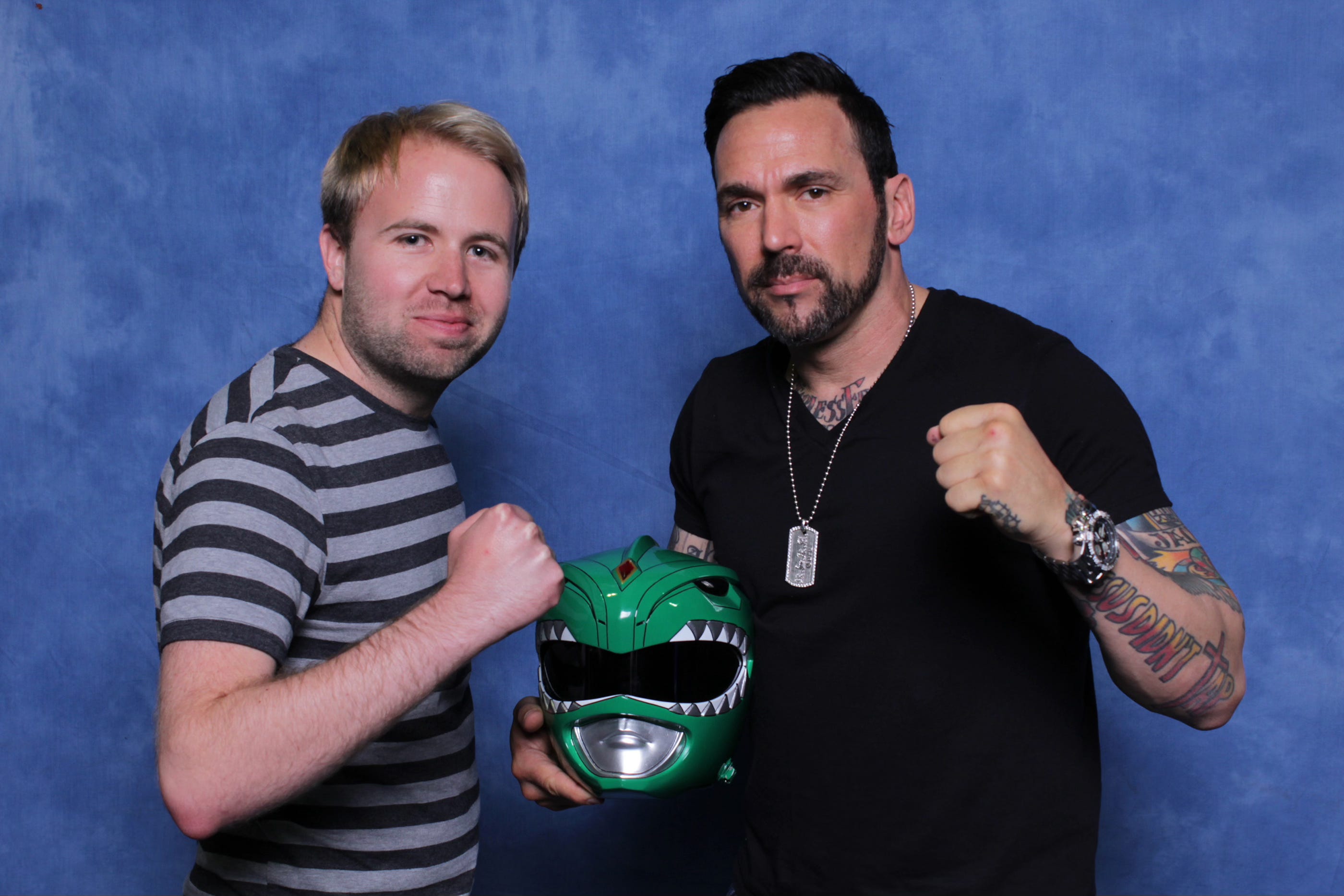
On Sunday 13th July 2014 I met my first Power Ranger, David Yost a.k.a Billy, the Blue Ranger at London Film and Comic Con, along with Bulk and Skull the show’s comic relief characters. Following this I supported Kimberly, the Pink Ranger actress Amy Jo Johnson on a crowdfunding project for a short film. At subsequent comic con events I met Johnny Yong Bosch and Catherine Sutherland (the second Black and Pink Rangers, respectively), and for the first and only time to date, I paid for a ‘photo op’ with Jason David Frank, a.k.a Tommy Oliver, the Green, then later White Ranger that I looked up at on the wall so many years earlier.
Aside from meeting and interacting with my childhood heroes, the stories continued with a comic book series based on the original show that started in 2016, which I’m still buying, and reading today. My long lost collection of Power Rangers merchandise has been slowly replaced with items I’ve picked up along the way over the past decade. I don’t shout about my fandom for this franchise in the same way I do Star Wars, but it continues to bring me joy on a regular basis.
Last November I was on day two of a weekend of pub crawls around Cheltenham when I glanced at my phone and was stopped in my tracks. I couldn’t believe the news I was reading at first and had to frantically search for other sources to confirm the information. Jason David Frank had taken his life.
Jason was a hero on and off screen. He drew the biggest queues at conventions all over the world and was well known for staying until the last autograph was signed. His karate schools trained hundreds of children in the martial arts prowess he displayed in the show. On social media he was as skilled as any professional motivational speaker, his words reaching me at the right time on multiple occasions. It was hard to accept that his personal battle has become too much for someone I held as invincible in my mind.
I was a bit lost for words for when I met him in 2016. If I had the chance again I’d tell him the story you’ve just read. I know it wouldn’t be the first time a fan had assured him of his legacy, it probably wouldn’t even be the first time on any given day. What’s heartbreaking is knowing that no amount of times being told this was enough to save him, when all it took was his image on a wall to protect me.
Other than some clumsy racial stereotypes and inexcusable discrimination behind the scenes, Power Rangers was relatively successful in its diversity and representation for a show conceived in the early 1990s. I grew up wanting to be part of a gang that consisted of people who either looked, or were culturally different to me. It set my generation on a good course for the world we’d live in.
So, even when I do wear my fandom on my sleeve (you should see the hoodie I bought recently, it’s beautifully garish), it’s not my questionable fashion choices that are the reason Power Rangers is ingrained in me. It’s the subtle lessons I learnt, the smaller week-to-week victories, the knowledge that some part of me will always be a “teenager with attitude”.
 Liam Toms